
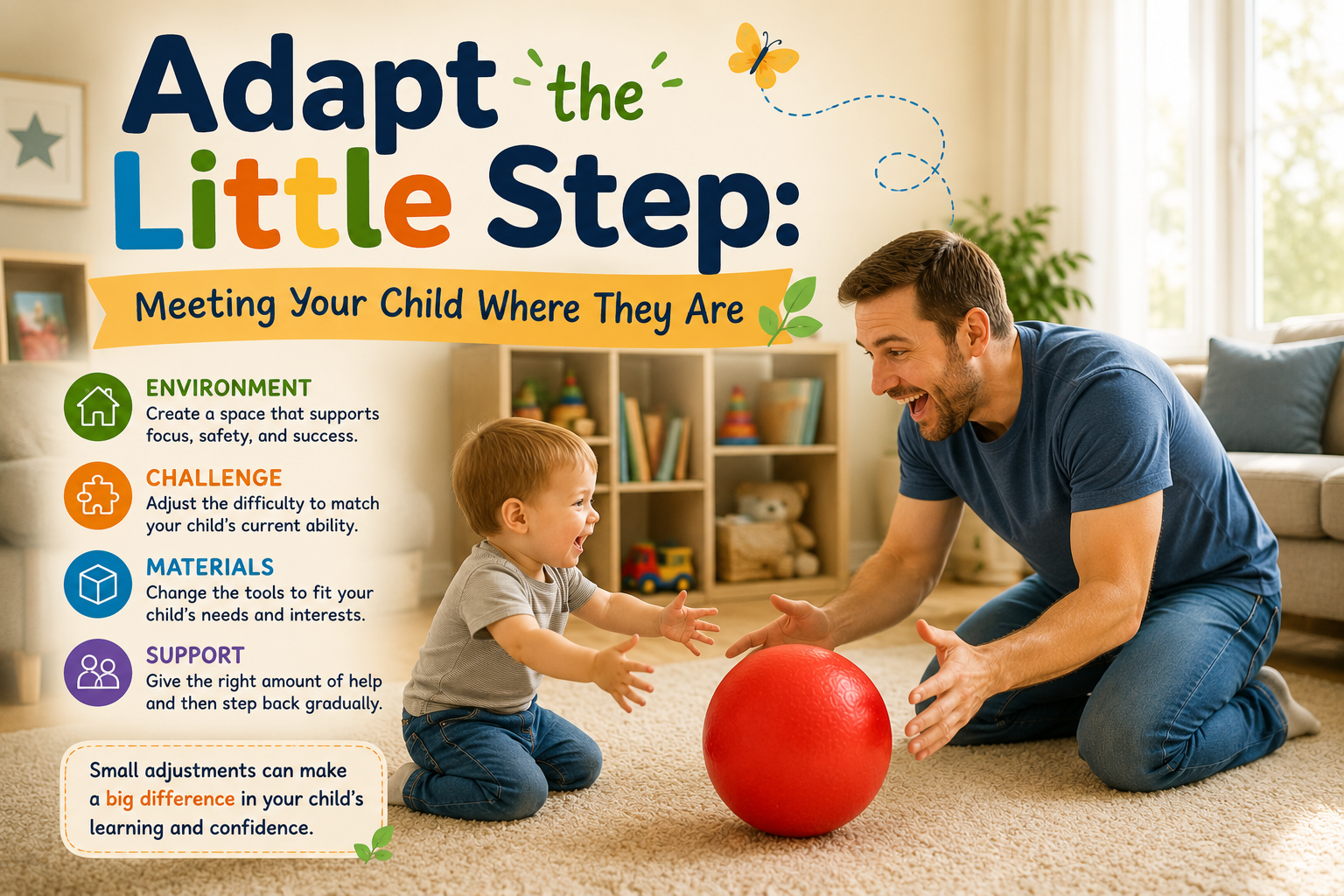
Adapt the Little Step: Meeting Your Child Where They Are
Children don’t all approach learning in the same way or at the same pace. An activity that feels easy and exciting for one child may feel frustrating or overwhelming for another. That doesn’t always mean the child isn’t ready to learn the skill. Sometimes, the activity simply needs a small adjustment.
Before giving up on an activity, consider these four areas.
Environment
Take a look at where the activity is happening. Is the television competing for your child’s attention? Is there enough room to move? Are the materials within reach?
Small changes to the environment can make it easier for a child to focus and participate. Try removing distractions, creating more space, moving materials closer, or choosing a quieter location.
Challenge
The goal is to find the right level of challenge—not so difficult that your child becomes overwhelmed, but not so easy that there is no opportunity to grow.
If your child is struggling, break the activity into smaller steps or complete the first step together. If they’ve already mastered it, add a new challenge.
Adjusting an activity isn’t lowering expectations. It’s creating a pathway toward success.
Materials
Sometimes changing what your child is using can make all the difference.
A larger ball may be easier to catch. A thicker crayon may be easier for little hands to hold. Fewer puzzle pieces can make a task feel manageable. Different textures can make an activity more interesting—or more comfortable—for a child.
You don’t always need a completely different activity. Try changing the tools first.
Support
Pay attention to how much help your child needs right now.
You might demonstrate the activity first, use simple verbal directions, offer a visual cue, or complete part of the task together. As your child becomes more confident, gradually reduce your help and allow them to take greater ownership.
The goal isn’t to do the activity for your child. It’s to provide just enough support to help them take the next little step independently.
The Little Step Approach
When an activity isn’t working, don’t immediately assume your child can’t do it.
Look at the environment. Adjust the challenge. Change the materials. Consider the support you’re providing.
Sometimes the smallest adjustment will open the door to learning.
Meet your child where they are. Adjust the step when needed. Then help them keep moving forward—one little step at a time.