Comprehension
Building Understanding Through Everyday Moments
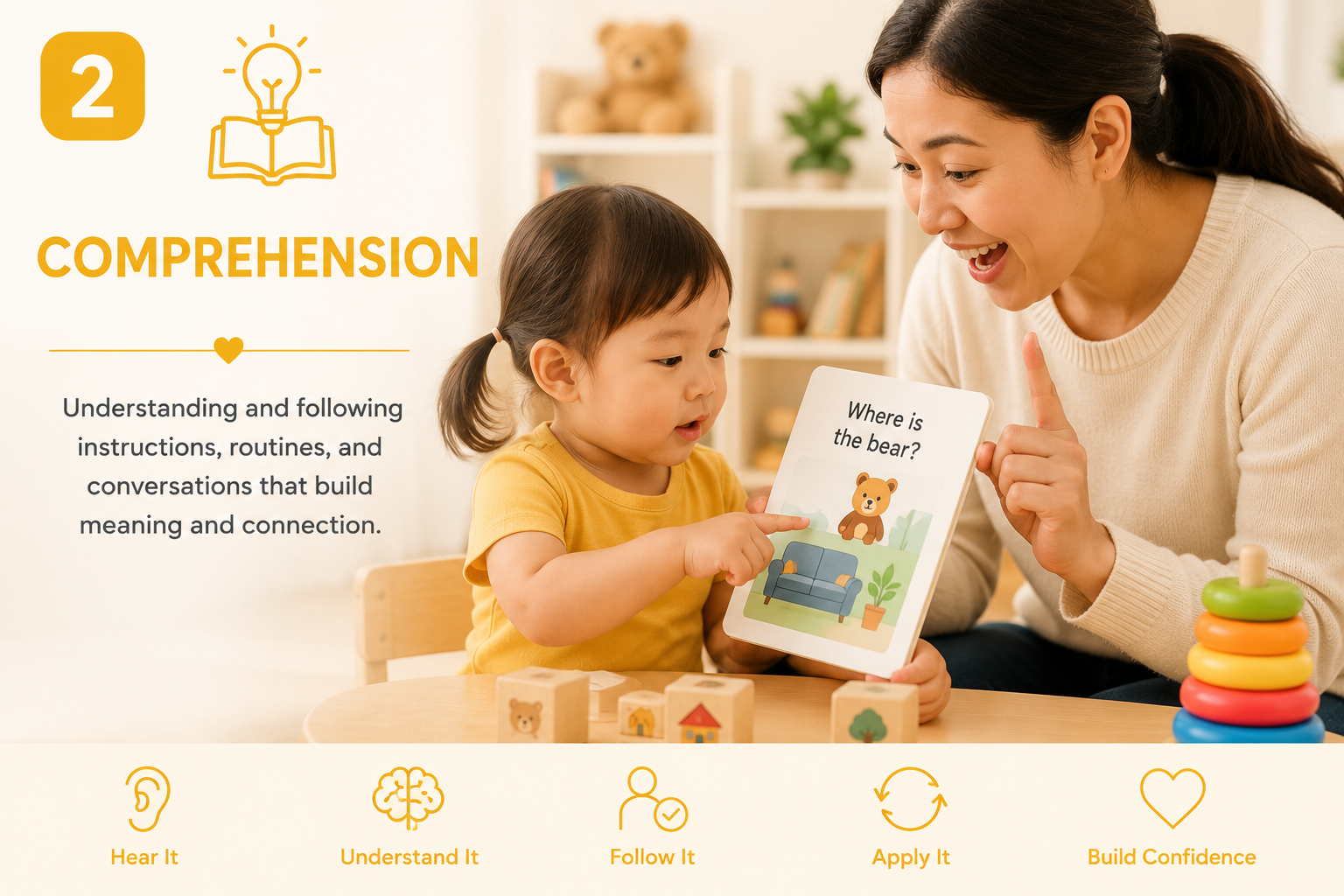
Before children can speak in full sentences, they begin learning to understand the world around them. Every familiar word, routine, and simple instruction helps build comprehension—the ability to understand language, recognize meaning, and respond with purpose.
Between 12 and 24 months, comprehension develops quickly. Children begin connecting words to actions, recognizing familiar routines, following simple directions, and understanding that language helps make sense of their everyday experiences.
Strong comprehension becomes the foundation for communication, learning, confidence, and future academic success.
Why Comprehension Matters
Understanding language always develops before expressive language.
Your child may not be able to say many words yet, but they may already understand far more than they can express.
When you say:
“Let’s put on your shoes.”
“Where’s your teddy bear?”
“Can you bring me the ball?”
Your child is learning to connect words with actions, objects, and expectations.
Each successful interaction strengthens their ability to understand the world around them.
Everyday Routines Build Understanding
The best opportunities to develop comprehension happen naturally throughout the day.
During meals…
At bath time…
While getting dressed…
Cleaning up toys…
Reading books…
These predictable routines allow your child to hear the same words in meaningful situations. Repetition helps build confidence and understanding without feeling like a lesson.
Children learn best when language is connected to real experiences.
Give Simple Directions
As your child’s understanding grows, begin introducing short, age-appropriate instructions.
Try phrases like:
- “Bring me your shoes.”
- “Wave goodbye.”
- “Let’s put the blocks away.”
- “Show me your nose.”
- “Give the ball to Daddy.”
Celebrate every successful response with a smile, encouragement, or praise.
Learning is built through positive experiences—not pressure.
Give Time to Process
Young children need a few extra seconds to understand what they’ve heard.
After giving a simple instruction, pause before repeating yourself.
Those few moments give your child time to think, process the words, and respond independently.
Rescuing too quickly can unintentionally take away an opportunity for learning.
Patience is one of the greatest gifts you can give during this stage of development.
Every Child Learns at Their Own Pace
Some children respond quickly to new words and instructions.
Others need more repetition before they feel confident.
Both are completely normal.
Avoid comparing your child’s progress to other children. Instead, celebrate steady growth and continue creating positive opportunities for learning throughout the day.
Consistency, encouragement, and everyday conversations build lasting understanding over time.
Try This Today
Choose one everyday routine, such as getting dressed, mealtime, or cleanup.
Use the same simple words and short instructions each time.
Pause to allow your child to respond before helping.
Celebrate every success, no matter how small.
Remember, every word your child understands today becomes part of the foundation for the conversations, learning, and confidence they will develop tomorrow.