
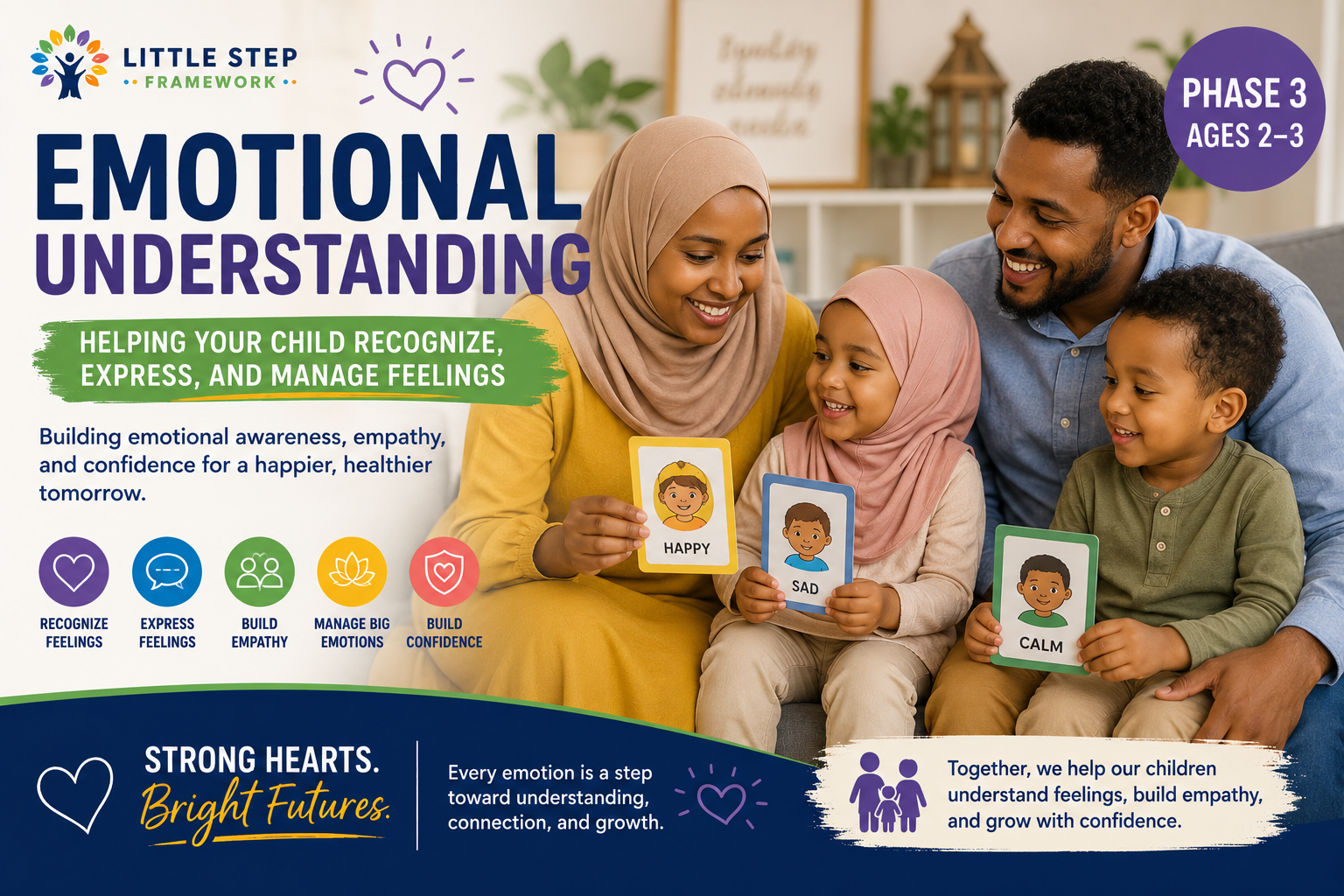
Emotional Understanding
Helping Your Child Recognize, Express, and Manage Feelings
Between 2 and 3 years of age, your child begins experiencing bigger emotions than ever before. Excitement, frustration, happiness, disappointment, pride, and sadness can sometimes change from one moment to the next.
These emotional ups and downs are a normal part of development.
During this stage, children are learning that emotions have names, feelings can be expressed in healthy ways, and trusted adults can help them understand what they’re experiencing.
Emotional understanding doesn’t mean children stop having big feelings.
It means they slowly learn what those feelings mean and how to respond to them with confidence.
Why Emotional Understanding Matters
Emotional development is one of the most important foundations for healthy relationships and lifelong well-being.
When children learn to recognize and express their emotions, they become better able to:
- Communicate their needs.
- Build friendships.
- Develop empathy.
- Solve conflicts peacefully.
- Recover from frustration.
- Build confidence and resilience.
Every conversation about feelings helps strengthen these lifelong skills.
Every Emotion Is an Opportunity to Learn
Children don’t need to hide their emotions.
They need help understanding them.
When your child becomes excited…
Celebrate with them.
When they become frustrated…
Help them find words for what they’re feeling.
When they feel disappointed…
Acknowledge the emotion before offering solutions.
Children learn emotional awareness by experiencing emotions with caring adults who help them make sense of those moments.
Give Feelings a Name
One of the simplest ways to build emotional understanding is by putting feelings into words.
Instead of saying,
“You’re okay.”
Try saying,
“You look disappointed because your block tower fell.”
Or,
“You seem excited to go outside!”
Naming emotions helps children connect their feelings with language, making those emotions easier to understand over time.
Model Calm Responses
Children learn emotional regulation by watching the adults around them.
When challenges happen, your calm response teaches more than your words ever could.
Speak gently.
Take a deep breath together.
Show patience.
Offer comfort before correction.
Children begin developing self-control by borrowing the calm of trusted adults.
Teach Empathy Through Everyday Moments
As emotional awareness grows, children begin noticing how others feel.
Ask simple questions like:
“How do you think your friend feels?”
“What could we do to help?”
“Did that make Grandma happy?”
These small conversations help children understand that everyone has feelings worth recognizing and respecting.
Empathy grows through practice.
Every Child Expresses Emotions Differently
Some children laugh loudly.
Some cry easily.
Some become quiet.
Others express themselves through movement before finding the words.
Every child experiences emotions differently.
Your goal isn’t to eliminate big feelings.
It’s to help your child recognize them, express them appropriately, and recover with confidence.
Progress happens one moment at a time.
Try This Today
Create a simple “Feelings Check-In.”
Throughout the day, ask:
“How are you feeling?”
Use picture cards, facial expressions, books, or mirrors to identify emotions together.
Celebrate happy moments.
Talk through difficult ones.
The more often children practice recognizing emotions, the more naturally they begin expressing them.
🌱 Growing Hearts Alongside Growing Minds
Every feeling your child recognizes…
Every emotion they express…
Every act of kindness…
And every comforting conversation…
Helps build emotional confidence.
The Little Step Framework encourages families to nurture emotional understanding through everyday moments—because emotionally healthy children become confident learners, caring friends, and resilient individuals, one little step at a time.