
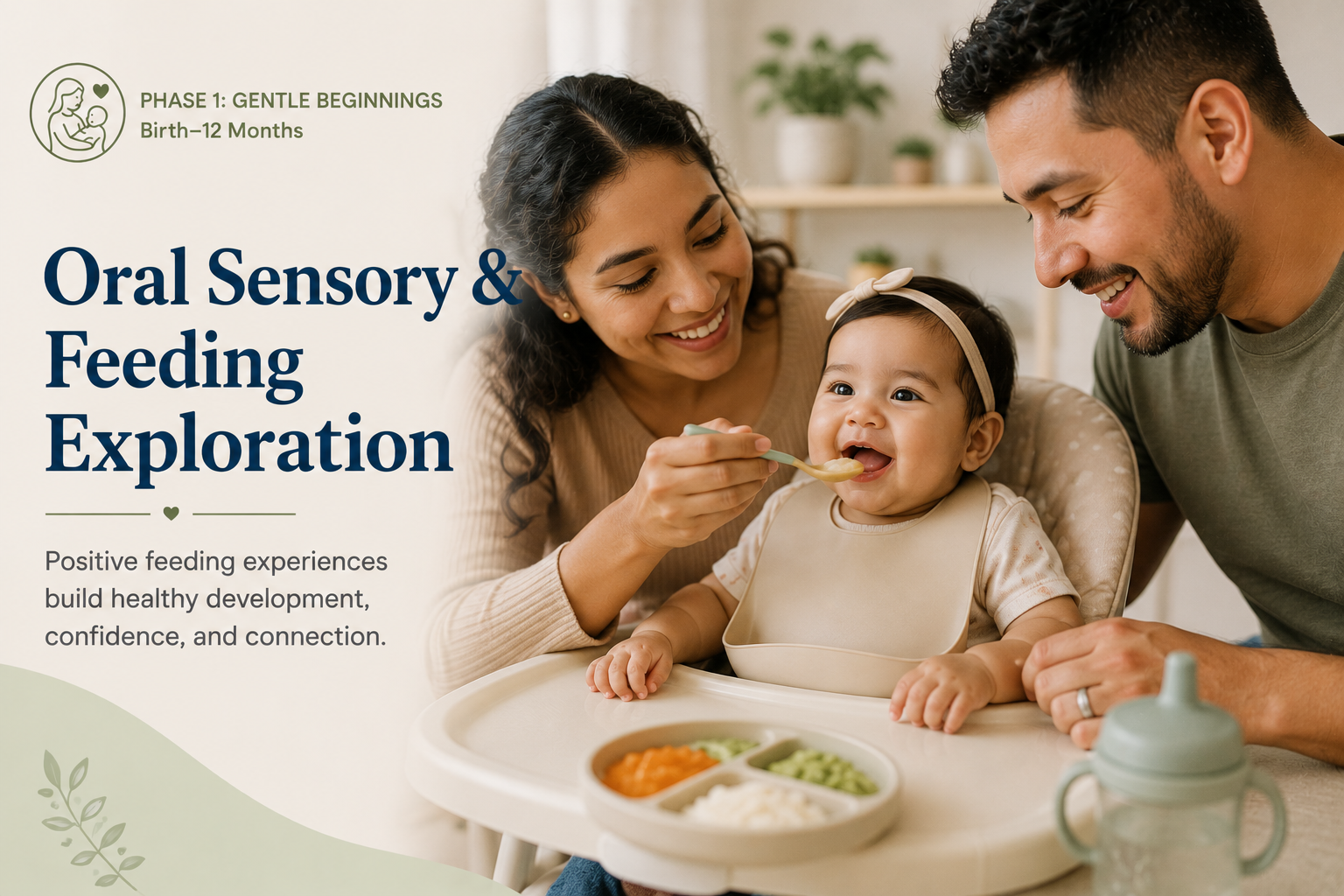
Oral Sensory & Feeding Exploration: Learning Through Everyday Feeding Experiences
Phase 1 – Gentle Beginnings (Birth–12 Months)
From the moment your baby is born, feeding is much more than nutrition—it is an opportunity for comfort, connection, learning, and sensory discovery.
During the first year of life, babies naturally explore the world through their mouths. Every feeding, every new texture, and every safe opportunity to explore helps your baby develop important sensory and oral motor skills that support healthy growth and future development.
Within the Little Step Framework, Oral Sensory & Feeding Exploration is one of the six Core Elements of Phase 1 – Gentle Beginnings because responsive feeding and safe sensory experiences help build confidence, comfort, and early learning.
What Is Oral Sensory & Feeding Exploration?
Oral Sensory & Feeding Exploration is the intentional practice of creating calm, responsive feeding experiences while providing safe opportunities for your baby to explore through their mouth.
Whether your baby is breastfed, bottle-fed, or beginning solid foods, each feeding becomes an opportunity to strengthen trust, encourage sensory development, and support healthy oral experiences.
Rather than following a rigid schedule alone, this Core Element encourages parents to observe their baby’s cues and respond with patience, consistency, and care.
Why It Matters
Feeding is one of the first ways babies experience the world.
Positive feeding experiences help support:
- Healthy oral sensory development.
- Comfort with new tastes and textures as your baby grows.
- Recognition of hunger and fullness cues.
- Positive parent-child bonding.
- Confidence during feeding routines.
- Early self-regulation and trust.
These everyday moments create a strong foundation for future eating habits and sensory experiences.
How to Encourage Healthy Feeding Experiences
Every baby develops at their own pace, but there are simple ways to make feeding both enjoyable and developmentally supportive.
Try these ideas:
- Watch for your baby’s hunger and fullness cues instead of rushing the feeding.
- Create a calm, comfortable feeding environment with minimal distractions.
- Allow your baby to explore safe, age-appropriate textures as they become developmentally ready.
- Talk, smile, and make gentle eye contact during feeding when your baby is calm and interested.
- Allow feeding to become a time for connection—not just nourishment.
Responsive feeding helps babies feel secure while encouraging positive associations with eating.
Follow Your Baby’s Cues
Your baby communicates long before they can use words.
Signs such as rooting, turning toward the bottle or breast, slowing down, looking away, or becoming distracted all provide valuable information about your baby’s needs.
Learning to recognize these cues helps create feeding experiences that are responsive rather than rushed.
What to Avoid
Positive feeding experiences happen when babies feel safe and comfortable.
Try to avoid:
- Pressuring your baby to finish a feeding.
- Ignoring signs that your baby is full or needs a break.
- Introducing foods or textures before your baby is developmentally ready.
- Turning feeding into a stressful experience.
Remember, every baby develops at their own pace, and feeding should remain a positive experience.
Every Feeding Is an Opportunity
Feeding is one of the first routines your baby experiences every day.
When you respond to your baby’s cues with patience and consistency, you’re doing much more than meeting nutritional needs—you are building trust, encouraging sensory development, and supporting a healthy relationship with food.
These ordinary moments become extraordinary opportunities for growth.
Try This Today
During your baby’s next feeding, slow down and simply observe. Notice your baby’s hunger and fullness cues, make gentle eye contact if they are interested, and allow the feeding to follow your baby’s natural pace whenever appropriate.
Your Next Little Step
Oral Sensory & Feeding Exploration is one of the six Core Elements in Phase 1 – Gentle Beginnings.
The final Core Element is Routine & Emotional Comfort, where everyday routines help babies develop security, trust, and emotional regulation.
Or, if you haven’t already, take the FREE Phase 1 Development Snapshot to discover personalized guidance and identify your baby’s next Little Step