Visual Stimulation: Helping Your Baby Discover the World Through Sight
Phase 1 – Gentle Beginnings (Birth–12 Months)
From the very beginning, your baby’s eyes are working hard to make sense of the world. Every face, every smile, every movement, and every moment of eye contact helps strengthen the foundation for learning.
Visual stimulation is more than simply giving your baby something to look at. It is about providing meaningful, age-appropriate experiences that encourage curiosity, attention, and connection.
Within the Little Step Framework, Visual Stimulation is one of the six Core Elements of Phase 1 because healthy visual development supports many of the skills your child will continue building throughout early childhood.
What Is Visual Stimulation?
Visual stimulation is the intentional practice of providing your baby with safe, engaging opportunities to observe faces, movement, contrast, colors, and everyday objects.
Rather than overwhelming your baby with constant activity, visual stimulation encourages simple interactions during calm, alert moments when your baby is naturally ready to learn.
Why Visual Stimulation Matters
A baby’s vision develops rapidly during the first year of life.
Each new visual experience helps your baby:
- Develop visual attention.
- Strengthen eye tracking skills.
- Recognize familiar faces.
- Build curiosity about their surroundings.
- Improve focus during everyday interactions.
- Support future learning and exploration.
These early experiences also strengthen the connection between caregiver and child as babies learn to recognize the people who care for them most.
How to Encourage Visual Development
Supporting your baby’s visual development doesn’t require special equipment.
Simple everyday moments can make a meaningful difference.
Try these ideas:
- Allow your baby to look at your face while you speak or smile.
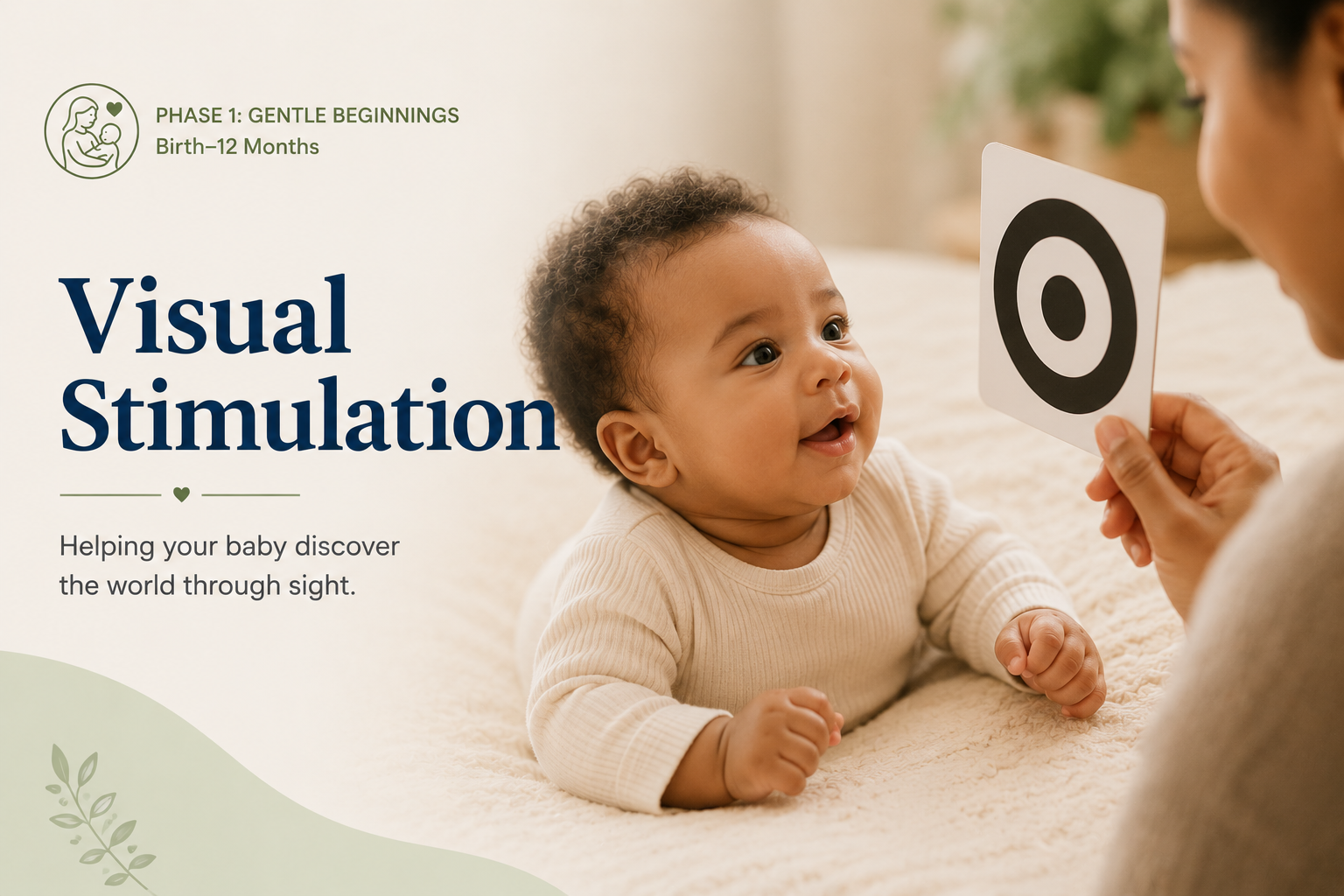
- Hold high-contrast images or simple objects about 8–12 inches from your baby’s face during calm, alert moments.
- Slowly move an object from side to side if your baby shows interest in following it with their eyes.
- Give your baby opportunities to observe different colors, shapes, and safe household objects.
- Change your baby’s position occasionally so they experience different views of their environment.
Remember, short, positive interactions are more effective than long periods of stimulation.
Follow Your Baby’s Lead
Every baby responds differently.
Some babies enjoy looking at faces for extended periods, while others may only engage for a few seconds before looking away.
When your baby turns their head, closes their eyes, becomes fussy, or loses interest, simply pause and try again later.
Learning happens best when babies feel comfortable and relaxed.
What to Avoid
Visual stimulation should always be gentle and age appropriate.
Avoid:
- Overstimulating your baby with too many toys at once.
- Bright flashing lights or excessive screen exposure.
- Trying to force your baby to keep looking when they need a break.
- Long periods of continuous stimulation without rest.
The goal is to encourage curiosity—not overwhelm your baby’s developing senses.
Every Glance Is an Opportunity
Parents often underestimate how much learning happens during ordinary moments.
When your baby watches your smile, follows your movement across the room, or studies a simple object, they are building important visual skills that support future development.
These small experiences become part of the foundation for attention, communication, exploration, and learning.
Try This Today
During your baby’s next calm, alert moment, hold a high-contrast card or simply position your face about 8–12 inches away. Smile, speak softly, and allow your baby to naturally observe or follow your movements for 20–30 seconds.
Keep the experience relaxed, enjoyable, and responsive to your baby’s cues.
Your Next Little Step
Visual stimulation is one of the six Core Elements in Phase 1 – Gentle Beginnings.
As your baby becomes more aware of the people and world around them, continue supporting development by exploring the next Core Element: Sound and Language Exposure.
Or, if you haven’t already, take the FREE Phase 1 Development Snapshot to discover personalized guidance and identify your baby’s next Little Step.