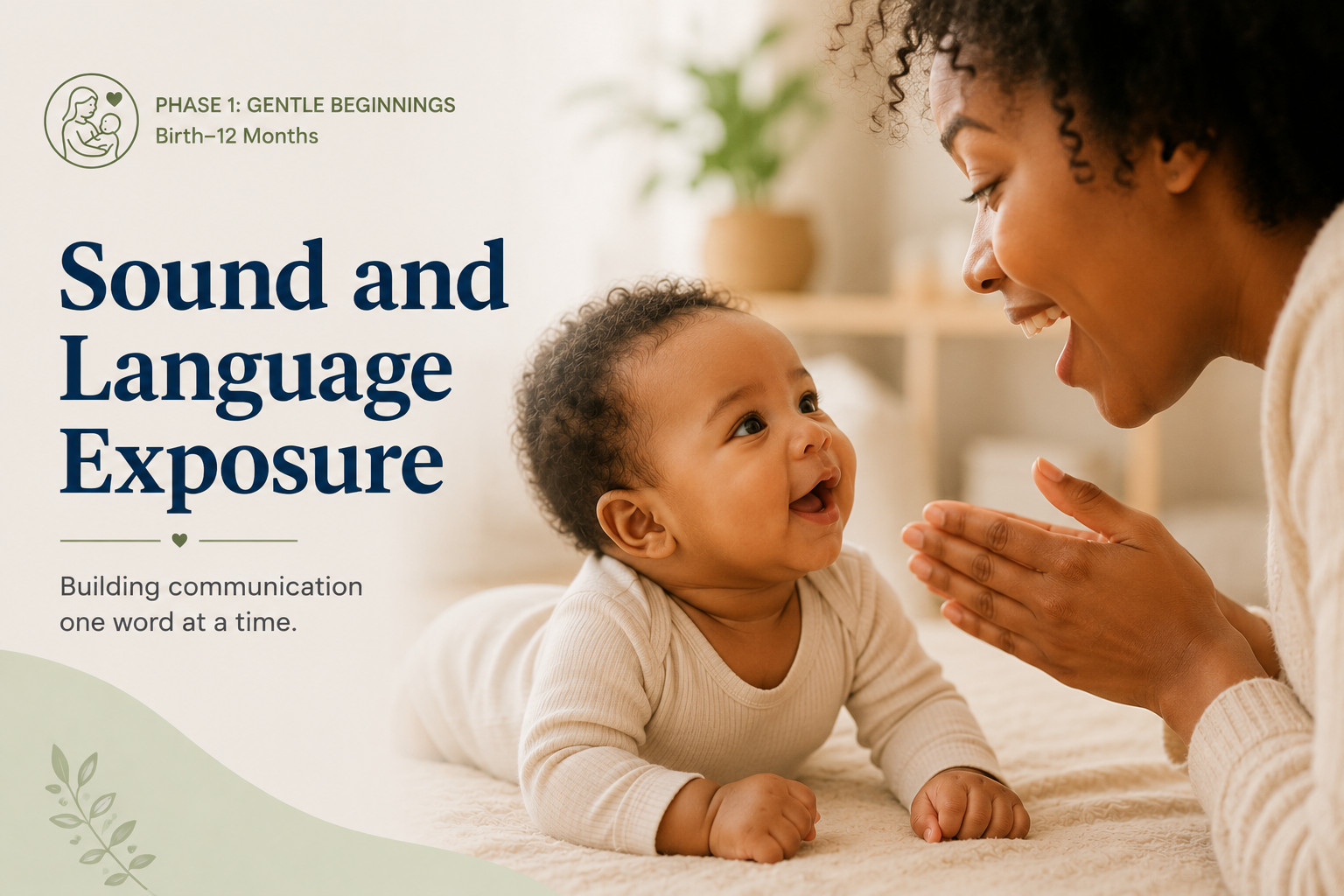
Sound and Language Exposure: Building Communication One Word at a Time
Phase 1 – Gentle Beginnings (Birth–12 Months)
Long before your baby speaks their first word, they are listening, observing, and learning from every sound around them.
Your voice is one of the most important learning tools your baby will ever experience. Every conversation, lullaby, story, and gentle response helps build the foundation for language, communication, and emotional connection.
Within the Little Step Framework, Sound and Language Exposure is one of the six Core Elements of Phase 1 – Gentle Beginnings because language development begins from the very first days of life.
What Is Sound and Language Exposure?
Sound and Language Exposure is the intentional use of your voice and everyday sounds to help your baby become familiar with language.
Babies don’t need perfect words or long conversations. They benefit most from hearing your natural voice throughout the day.
Talking during diaper changes, singing while rocking, reading a short book, or describing what you’re doing all help your baby begin connecting sounds with meaning.
Why Sound and Language Exposure Matters
During the first year, your baby’s brain is constantly building connections.
Hearing language every day helps your baby:
- Recognize familiar voices.
- Develop listening and attention skills.
- Become familiar with the rhythm and patterns of speech.
- Strengthen early communication.
- Build the foundation for future vocabulary and language development.
- Deepen emotional connection with trusted caregivers.
These simple interactions prepare your baby for the exciting communication milestones that will come during the toddler years.
How to Encourage Early Language Development
Language learning happens naturally throughout your day.
Try incorporating simple communication into everyday routines:
- Talk to your baby while feeding, dressing, or changing diapers.
- Describe what you are doing using simple, natural language.
- Read short books with large, colorful pictures.
- Sing nursery rhymes or familiar songs.
- Respond to your baby’s coos, smiles, and sounds as though you’re having a conversation.
- Pause occasionally to give your baby an opportunity to respond with sounds or expressions.
These everyday conversations help your baby learn that communication is a shared experience.
Follow Your Baby’s Cues
Some days your baby will seem eager to listen and interact.
Other times they may be tired, hungry, or more interested in quietly observing.
When your baby looks away, becomes fussy, or loses interest, simply pause and continue another time.
The goal is enjoyable interaction—not constant stimulation.
What to Avoid
Healthy language development is supported by real human interaction.
Try to avoid:
- Long periods of background television or excessive screen time.
- Speaking so quickly that interactions become overwhelming.
- Feeling pressure to constantly entertain your baby.
- Worrying about using perfect words or phrases.
Your baby benefits most from hearing your natural voice spoken with warmth and consistency.
Every Conversation Matters
You may not receive a spoken response today, but your baby is learning from every interaction.
Every word you speak, every song you sing, and every story you share helps build the communication skills that will continue developing throughout childhood.
Small conversations today become confident communication tomorrow.
Try This Today
Choose one everyday routine—such as feeding, bath time, or getting dressed—and narrate what you’re doing using a calm, friendly voice. Pause occasionally, smile, and respond to your baby’s sounds as if you’re enjoying a conversation together.
Your Next Little Step
Sound and Language Exposure is one of the six Core Elements in Phase 1 – Gentle Beginnings.
As your baby continues exploring the world through movement and touch, continue your journey by exploring the next Core Element: Touch and Motor Coordination.
Or, if you haven’t already, take the FREE Phase 1 Development Snapshot to discover personalized guidance and identify your baby’s next Little Step.