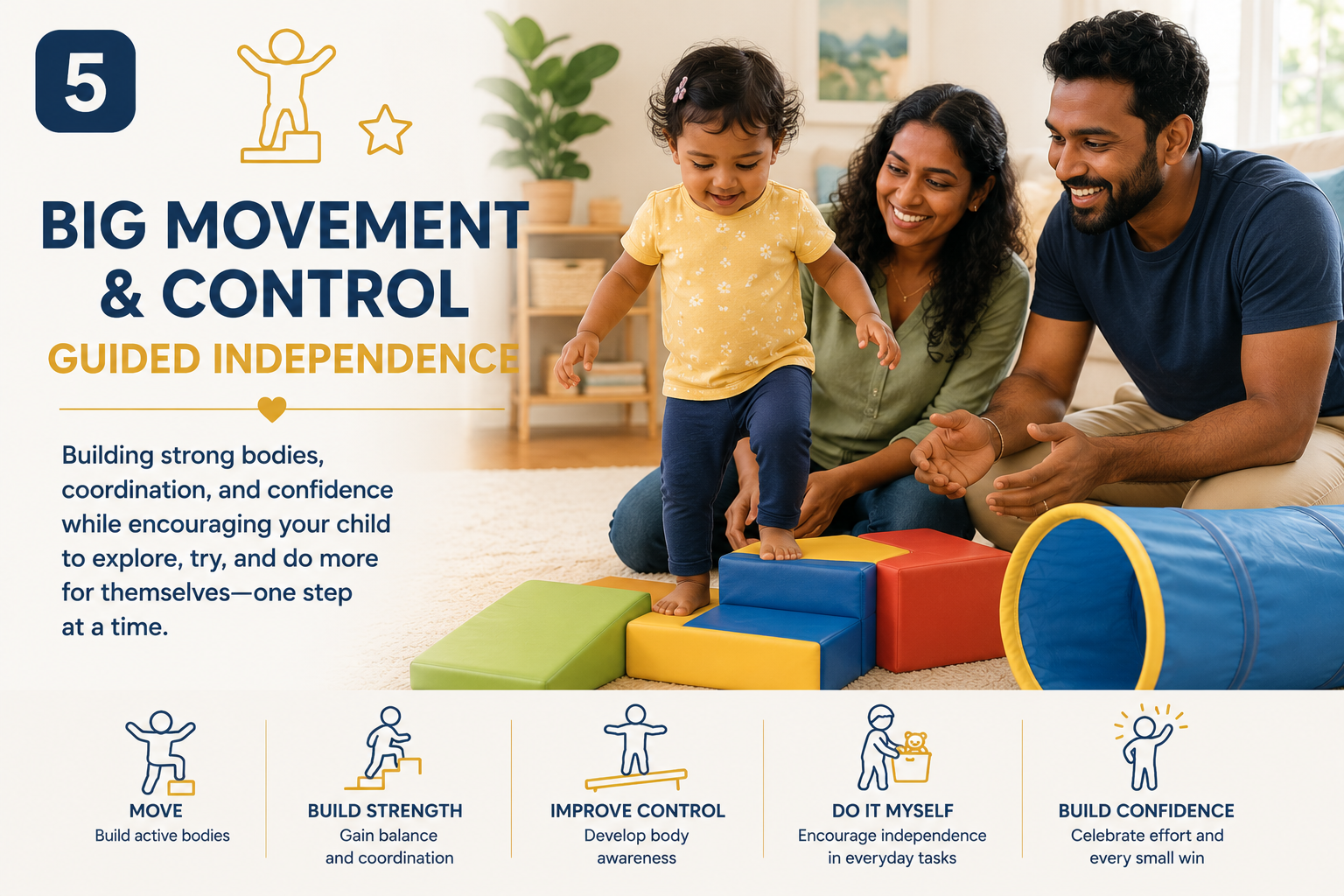
Big Movement Control & Guided Independence Learning Skills Pillar
Building Confidence Through Movement and Everyday Success
Between 12 and 24 months, your child becomes more active, curious, and eager to do things on their own. Every step they take, every object they carry, every attempt to climb, and every effort to help with simple daily tasks builds more than physical strength—it builds confidence.
Big Movement Control & Guided Independence focuses on helping children develop strong gross motor skills while encouraging safe opportunities to practice doing things for themselves.
Every movement is another step toward confidence, coordination, and independence.
Why Big Movement and Independence Matter
As children grow, movement becomes one of their primary ways of learning.
Walking across a room…
Climbing onto a cushion…
Pushing a toy…
Throwing a ball…
Carrying a favorite book…
Each activity strengthens muscles, balance, coordination, and body awareness.
At the same time, children begin discovering something even more important:
“I can do it myself.”
These early successes help build confidence that extends far beyond physical movement.
Everyday Activities Become Learning Opportunities
Your child doesn’t need expensive equipment or structured exercise.
The best opportunities happen naturally throughout the day.
Walking together…
Helping put toys away…
Carrying a small basket…
Climbing safely at the playground…
Pushing a toy stroller or toy lawn mower…
Dancing to music…
These simple activities strengthen the body while teaching responsibility, persistence, and independence.
Encourage Safe Independence
As your child grows, they’ll naturally want to try more things on their own.
Allow them opportunities to:
- Put toys into a basket.
- Help throw away a tissue.
- Carry lightweight objects.
- Choose between two shirts.
- Feed themselves with a spoon.
- Help clean up after play.
These everyday experiences teach that their efforts matter.
Offer guidance when needed, but allow your child the satisfaction of completing simple tasks independently whenever it is safe to do so.
Celebrate Effort Over Perfection
Learning new physical skills takes practice.
Your child may stumble while learning to walk faster…
Miss the basket while throwing a ball…
Or spill food while feeding themselves.
These are not failures.
They are signs of growth.
Celebrate their willingness to try again.
Confidence grows when children feel encouraged—not when they are expected to be perfect.
Every Child Develops at Their Own Pace
Some children become adventurous movers very early.
Others prefer to observe before trying something new.
Both are perfectly normal.
The goal isn’t to rush development or compare your child to others.
Instead, provide a safe environment where your child feels supported to explore, move, and gradually become more independent.
Small successes, repeated every day, create lasting confidence.
Try This Today
Invite your child to help with one simple household task.
They might carry a small towel, place toys into a basket, push a toy while walking beside you, or help put books back on a shelf.
Offer encouragement, smile often, and celebrate every effort.
Remember, every step your child takes—whether across the room or toward doing something independently—is helping build confidence, coordination, and the skills they will carry into every stage of learning.