Potty Training
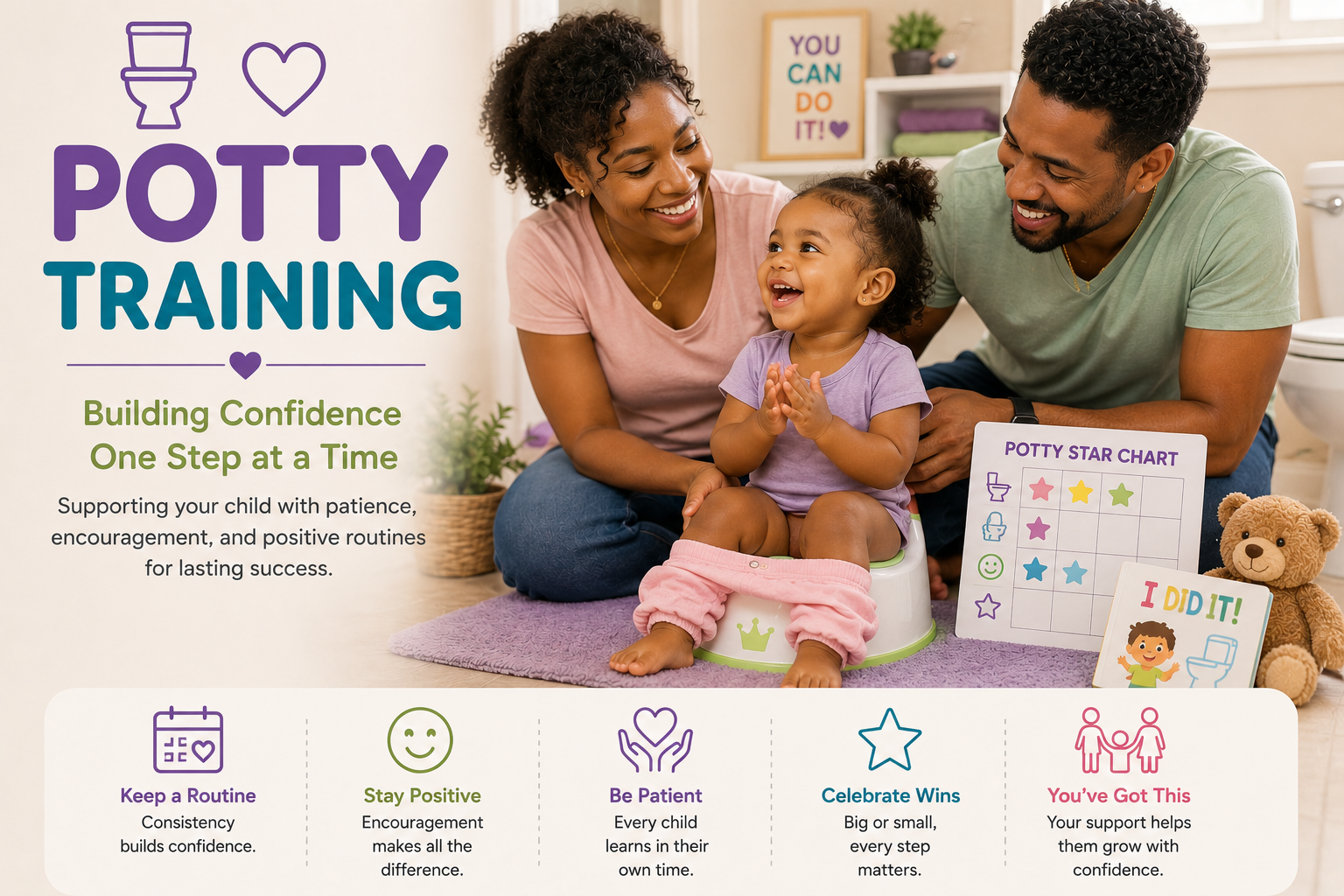
Building Confidence One Step at a Time
Potty training is one of the biggest milestones during the toddler years. While many parents wonder when to begin, the better question is whether your child is ready. Successful potty training isn’t based on age alone—it’s based on recognizing developmental readiness and responding with patience, consistency, and encouragement.
Every child develops at their own pace. Some children show signs of readiness shortly after their first birthday, while others may not be ready until later. Both are completely normal.
The goal isn’t to rush the process. The goal is to help your child build confidence through positive experiences.
Signs Your Child May Be Ready
Children often begin showing small signs that they’re ready for potty learning before they can fully use the toilet independently.
Look for signs such as.
Pulling off their diaper.
- Staying dry for longer periods.
- Showing interest in the bathroom or toilet.
- Telling you when their diaper is wet or dirty.
- Hiding before having a bowel movement.
- Following simple directions.
- Pulling pants up or down with assistance.
- Showing interest in wearing underwear.
- Wanting to imitate older siblings or adults.
Readiness doesn’t require every sign to be present. Even a few of these behaviors can indicate it’s a good time to gently begin introducing the routine.
Keep the Experience Positive
Children learn best when potty training feels encouraging rather than stressful.
Celebrate every attempt—not just success.
A child who simply sits on the potty is learning.
A child who tells you they need to go is making progress.
Every small step deserves encouragement because confidence grows through positive experiences.
Avoid punishment, criticism, or comparing your child to others. Pressure often creates frustration instead of progress.
Build Potty Training Into Your Day
Children thrive on predictable routines.
Try inviting your child to sit on the potty at natural times such as:
- After waking up.
- Before bath time.
- Before leaving the house.
- Before bedtime.
- After meals if they show signs of needing to go.
Keeping the routine calm and consistent helps your child understand what to expect.
Accidents Are Part of Learning
Every child has accidents.
Accidents do not mean your child has failed.
They simply mean your child is still learning to recognize their body’s signals.
When accidents happen:
Stay calm.
Help your child clean up without shame.
Offer gentle encouragement.
Continue the routine.
Children gain confidence when they know mistakes are a normal part of learning.
Follow Your Child’s Pace
Some children become independent quickly.
Others need weeks or even months of practice.
Avoid setting deadlines.
Instead, pay attention to your child’s readiness, confidence, and growing awareness.
Supporting your child’s natural rhythm often leads to a smoother and more successful experience.
Make Success Feel Exciting
Children are motivated by encouragement.
Simple celebrations such as:
- Praise.
- High-fives.
- Stickers.
- A star chart.
- Choosing the next story at bedtime.
can help make potty learning feel fun and rewarding.
The greatest reward, however, is helping your child feel proud of their own accomplishments.
Try This Today
Choose one regular time each day to introduce a relaxed potty routine.
Keep the experience brief, positive, and pressure-free.
Celebrate every effort with encouragement, smiles, and patience.
Remember, potty training is not about reaching the finish line quickly. It’s about helping your child build confidence, independence, and healthy habits that will last for years to come.
 A Gentle Reminder
 A Gentle Reminder
There is no “perfect” age to potty train.
Your child is not behind if they need more time.
Progress happens one small step at a time.
Just like every part of the Little Step Framework, success comes through consistency, encouragement, and trusting your child’s individual pace. Every positive experience helps build the confidence they’ll carry into the next stage of development.
Try Phase 2 Complete Development Program. Return to Parent Learning Center.