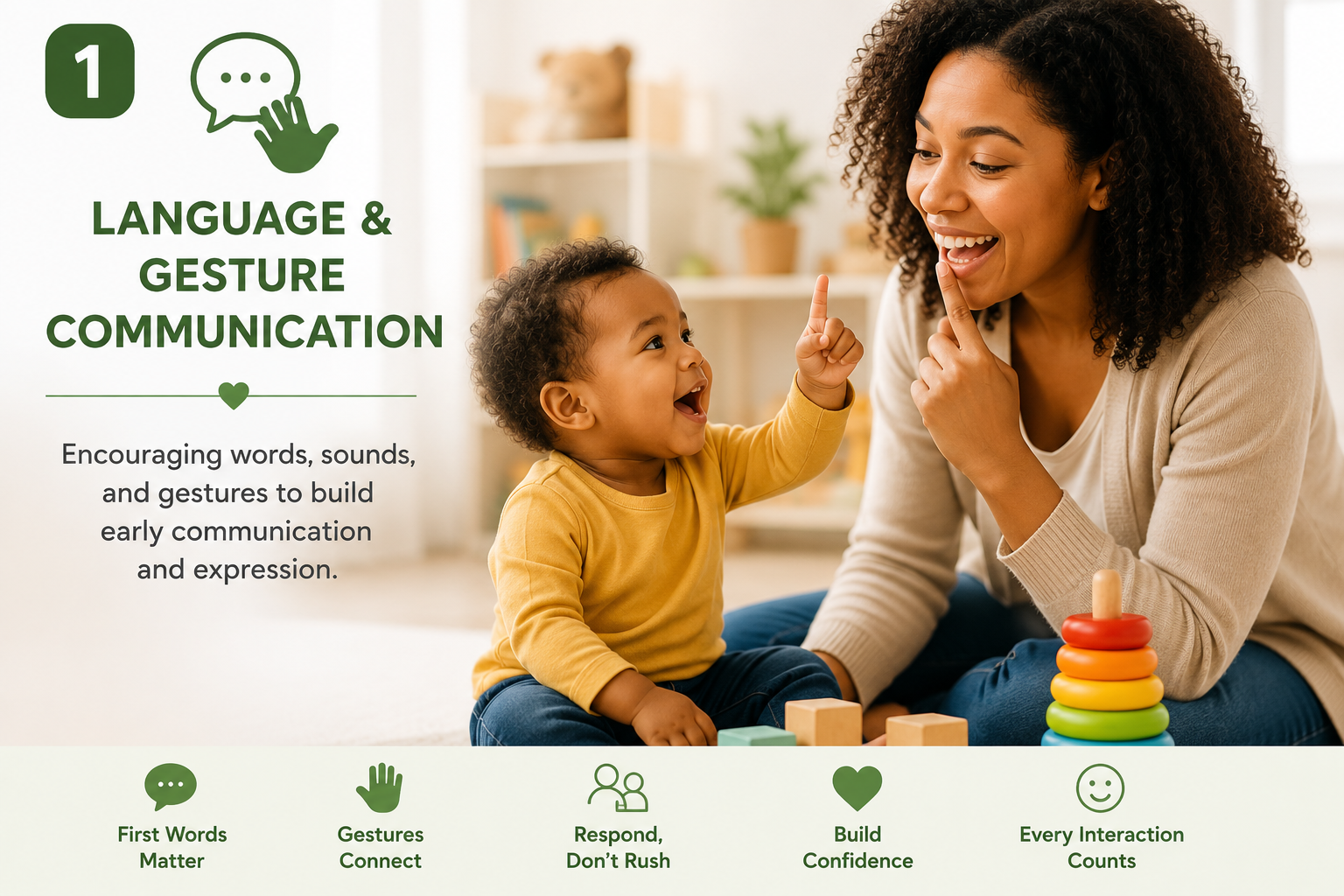
Language & Gesture Communication
Building Communication Before Words
From the moment your child begins pointing, waving, clapping, or reaching for you, they are communicating. Long before they can form complete sentences, they are learning that their sounds, gestures, facial expressions, and actions have meaning. Every time you respond, you help strengthen the foundation for language.
Between 12 and 24 months, communication develops rapidly. Children begin connecting words with objects, people, routines, and experiences. They also discover that gestures, sounds, and simple words help them express their needs and connect with the people around them.
Language development isn’t about teaching perfect speech. It’s about creating thousands of meaningful interactions that help your child understand that communication is enjoyable, purposeful, and rewarding.
Why Language and Gestures Matter
When you respond to your child’s attempts to communicate—even if they aren’t using clear words—you encourage them to keep trying.
Pointing to a favorite toy…
Holding up their arms to be picked up…
Waving goodbye…
Attempting to say “ba” for ball…
These are all important milestones that deserve encouragement.
Every successful interaction strengthens your child’s confidence while helping build vocabulary, listening skills, and social connection.
Everyday Moments Become Learning Moments
The best language experiences happen during ordinary routines.
While getting dressed…
During meals…
Reading a favorite book…
Walking outside…
Playing with toys…
Simply describing what you see and responding to your child’s sounds and gestures teaches that words have meaning.
Children learn language by hearing it used naturally throughout the day—not through long lessons.
Follow Your Child’s Lead
Communication grows best when it is enjoyable.
If your child points toward a dog, respond with excitement.
“Yes! That’s a dog. The dog says woof!”
If they wave goodbye, wave back.
If they hand you a toy, name it before handing it back.
These simple exchanges create hundreds of opportunities for learning without adding extra work to your day.
Every Child Communicates Differently
Some children begin using many words early.
Others rely more on gestures before spoken language develops.
Both approaches are a normal part of learning to communicate.
The goal isn’t comparing your child to others—it’s recognizing and encouraging the progress they are making.
Celebrate every new sound, gesture, and word. Small moments repeated consistently create remarkable growth over time.
Try This Today
Choose one everyday routine—such as mealtime, getting dressed, or playtime—and intentionally slow down for five minutes.
Name the objects your child looks at.
Respond to every gesture with words.
Pause to give your child time to communicate before speaking for them.
Smile, make eye contact, and celebrate every attempt to connect.
Remember, communication begins long before full sentences. Every word you share, every gesture you recognize, and every conversation you enjoy together helps build the confidence and skills your child will use for years to come.