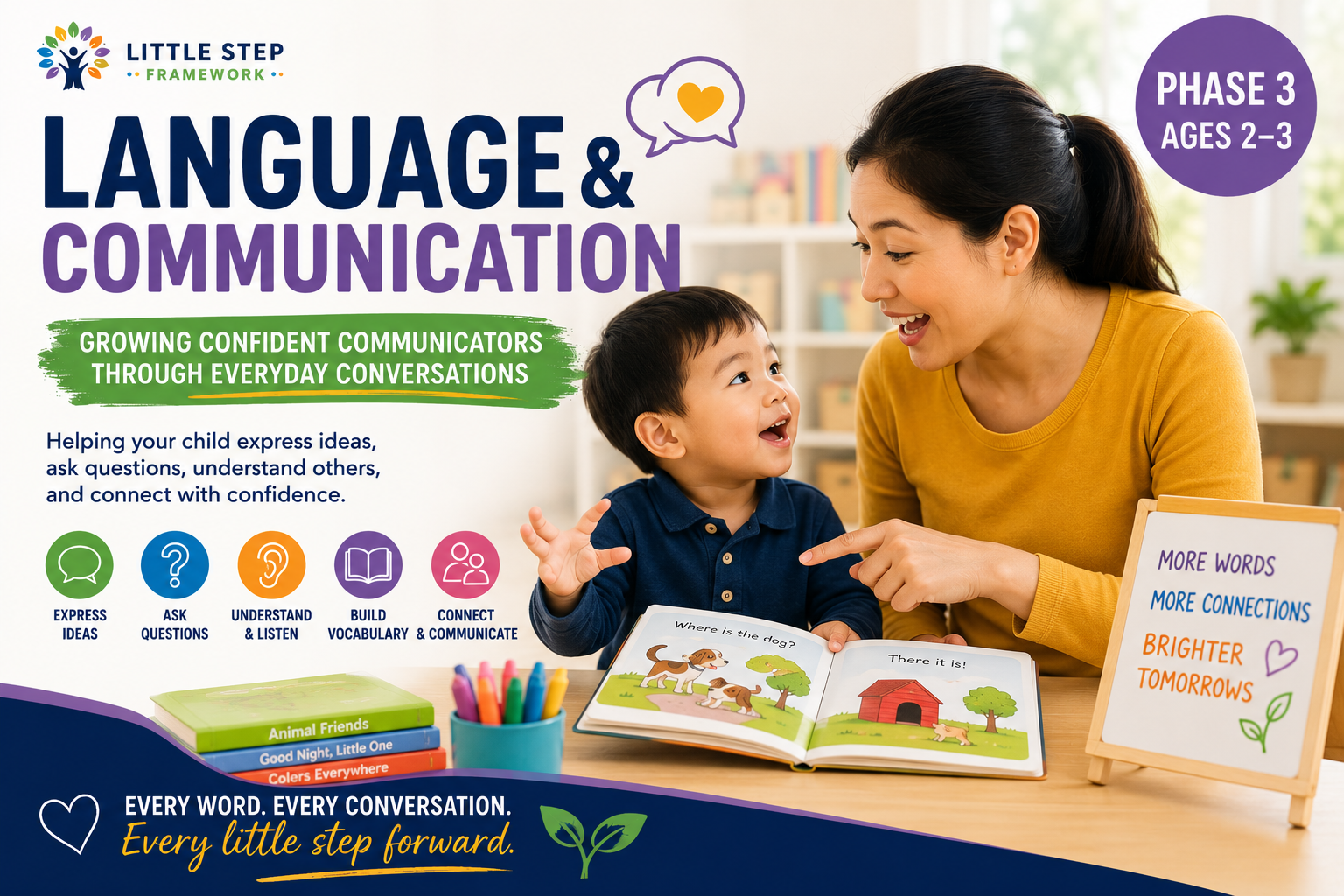
Language & Communication
Growing Confident Communicators Through Everyday Conversations
Between 2 and 3 years of age, your child’s language develops at an incredible pace. Their vocabulary expands, their sentences become longer, and conversations begin replacing simple words and gestures. This is a time when children become eager to ask questions, share ideas, and express what they’re thinking.
Language is more than speaking. It is how children connect with others, understand the world around them, solve problems, and build meaningful relationships.
Every conversation, story, song, and shared experience helps strengthen these important communication skills.
Why Language & Communication Matter
Communication is one of the most important skills your child will ever develop.
As language grows, children become better able to:
- Express their wants and needs.
- Share ideas and experiences.
- Ask questions.
- Understand instructions.
- Build friendships.
- Solve everyday problems.
Strong communication helps children become more confident, independent, and engaged learners.
Everyday Conversations Build Strong Language
Children learn language by hearing it used throughout the day.
Talk while preparing meals.
Describe what you see during a walk.
Discuss colors, animals, vehicles, or weather.
Explain what you’re doing during everyday routines.
These simple conversations expose your child to new vocabulary while helping them connect words with real experiences.
The more meaningful language children hear, the stronger their communication becomes.
Encourage Questions
Around this age, children often begin asking:
“What’s that?”
“Where did it go?”
“Why?”
These questions are signs that your child’s thinking and language are growing together.
Take time to answer patiently.
Even simple conversations help expand vocabulary and encourage curiosity.
Questions aren’t interruptions.
They’re opportunities for learning.
Give Your Child Time to Talk
Sometimes adults answer too quickly.
After asking your child a question, pause.
Give them time to think.
Allow them to search for words and finish their thoughts.
These extra moments build confidence while encouraging independent communication.
Listening is just as important as speaking.
Read Together Every Day
Books introduce children to words they may not hear during everyday conversations.
Point to pictures.
Ask simple questions.
Encourage your child to describe what they see.
Read favorite books again and again.
Repetition strengthens vocabulary, listening skills, memory, and comprehension.
Just a few minutes of reading each day creates lasting benefits.
Celebrate Every Conversation
Your child doesn’t need perfect pronunciation to be understood.
Celebrate their efforts.
Expand on what they say.
If your child says:
“Big truck.”
You might respond:
“Yes! That’s a big blue truck driving down the road.”
By naturally adding words, you introduce new vocabulary without correcting or discouraging your child.
Every conversation becomes another opportunity for growth.
Every Child Finds Their Voice Differently
Some children talk constantly.
Others listen carefully before speaking.
Some enjoy telling stories.
Others communicate through observation and thoughtful responses.
Every communication style is unique.
Your role is simply to provide a safe, encouraging environment where language can grow naturally.
Confidence develops one conversation at a time.
Try This Today
Choose one routine today—mealtime, bath time, or a walk outside.
Ask your child open-ended questions.
Describe what you both see.
Introduce one or two new words.
Listen carefully to their responses and encourage the conversation to continue.
Remember, every word your child hears, every question they ask, and every conversation you share helps build the communication skills they’ll use throughout their entire life.
🌱 Every Conversation Builds Confidence
Every new word…
Every shared story…
Every curious question…
And every meaningful conversation…
Helps your child become a confident communicator.
The Little Step Framework encourages families to make language a natural part of everyday life—because the strongest communication skills are built one little step at a time.