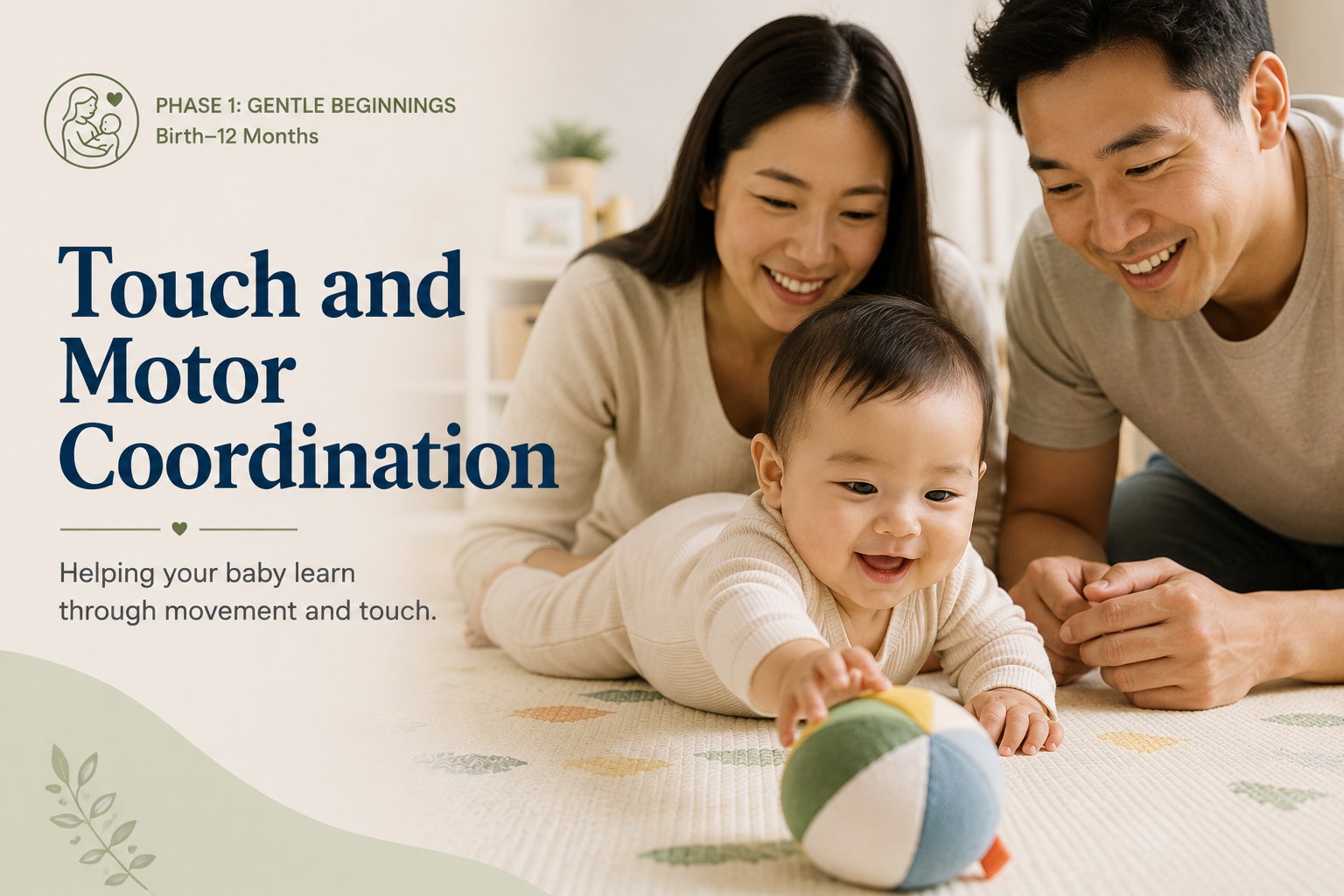
Touch and Motor Coordination: Helping Your Baby Learn Through Movement
Phase 1 – Gentle Beginnings (Birth–12 Months)
Every stretch, reach, grasp, kick, and gentle touch is part of your baby’s journey toward understanding their body and the world around them.
Long before babies begin crawling or taking their first steps, they are developing strength, coordination, balance, and body awareness through everyday movement and sensory experiences.
Within the Little Step Framework, Touch and Motor Coordination is one of the six Core Elements of Phase 1 – Gentle Beginnings because movement and touch work together to build the foundation for future physical development.
What Is Touch and Motor Coordination?
Touch and Motor Coordination is the intentional use of safe movement, gentle touch, and supervised play to help your baby develop body awareness, muscle control, and confidence.
Everyday activities such as tummy time, reaching for toys, feeling different textures, kicking their legs, or grasping your finger all contribute to healthy development.
These experiences don’t require complicated exercises—they simply encourage your baby to explore movement naturally.
Why Touch and Motor Coordination Matters
Movement is one of your baby’s earliest ways of learning.
As babies move and experience different sensations, they begin developing:
- Body awareness.
- Muscle strength.
- Balance and coordination.
- Hand-eye coordination.
- Fine and gross motor skills.
- Confidence through exploration.
These early skills create the building blocks for rolling, sitting, crawling, standing, walking, and many future developmental milestones.
How to Encourage Movement and Exploration
You can support your baby’s motor development through short, enjoyable experiences during awake, supervised time.
Try these simple ideas:
- Provide age-appropriate tummy time each day.
- Encourage your baby to reach for soft toys or your finger.
- Allow safe opportunities to kick, stretch, and move freely.
- Introduce different safe textures for your baby to touch and explore.
- Gently guide your baby’s hands toward objects without forcing movement.
- Celebrate your baby’s efforts rather than focusing on perfection.
Short, frequent opportunities throughout the day are often more beneficial than one long session.
Follow Your Baby’s Cues
Every baby develops at their own pace.
Some babies enjoy movement right away, while others may need shorter sessions with more frequent breaks.
If your baby becomes tired, fussy, or frustrated, simply pause, comfort them, and try again later.
Positive experiences help build confidence and encourage continued exploration.
What to Avoid
Movement activities should always be safe, gentle, and responsive to your baby’s needs.
Avoid:
- Forcing movements your baby isn’t ready for.
- Comparing your baby’s progress with other children.
- Leaving your baby unattended during tummy time or floor play.
- Overstimulating your baby when they need rest.
Remember, development is a journey, not a race.
Every Movement Builds Confidence
Every time your baby reaches for a toy, grasps your finger, rolls over, or explores a new texture, they are learning something new about themselves and their environment.
These everyday experiences strengthen both physical development and confidence, helping your baby become an active explorer of the world around them.
Try This Today
During your baby’s next awake, supervised playtime, place a favorite soft toy just within reach. Encourage your baby to stretch, reach, or touch it while offering smiles and gentle encouragement. Celebrate every effort, no matter how small.
Your Next Little Step
Touch and Motor Coordination is one of the six Core Elements in Phase 1 – Gentle Beginnings.
As your baby continues exploring through movement, the next Core Element is Oral Sensory & Feeding Exploration, where everyday feeding and safe sensory experiences become opportunities for learning and development.
Or, if you haven’t already, take the FREE Phase 1 Development Snapshot to discover personalized guidance and identify your baby’s next Little Step.