Phase 2: Language & Gesture Communication — Building the Bridge to Understanding
Ages 1–2 Years
Between your child’s first and second birthday, an incredible transformation begins. What started as smiles, sounds, and simple gestures gradually becomes intentional communication, growing independence, and a deeper understanding of the world around them.
This stage is about much more than learning to speak.
It is a time when children begin connecting words with actions, gestures with meaning, emotions with language, and curiosity with learning. Every conversation, every shared experience, and every opportunity to explore helps strengthen the foundation for future learning.
The Little Step Framework’s Phase 2: Language & Gesture Communication is designed to help parents intentionally support these exciting changes through everyday interactions.
Rather than focusing on long lessons or structured teaching sessions, Phase 2 encourages families to use simple moments throughout the day to build communication, confidence, and independence—one little step at a time.
Children don’t wait until they can speak to communicate. Long before complete sentences, they’re already sharing thoughts through gestures, expressions, sounds, and curiosity. When parents learn to recognize those moments, communication becomes a conversation long before words are fully formed.
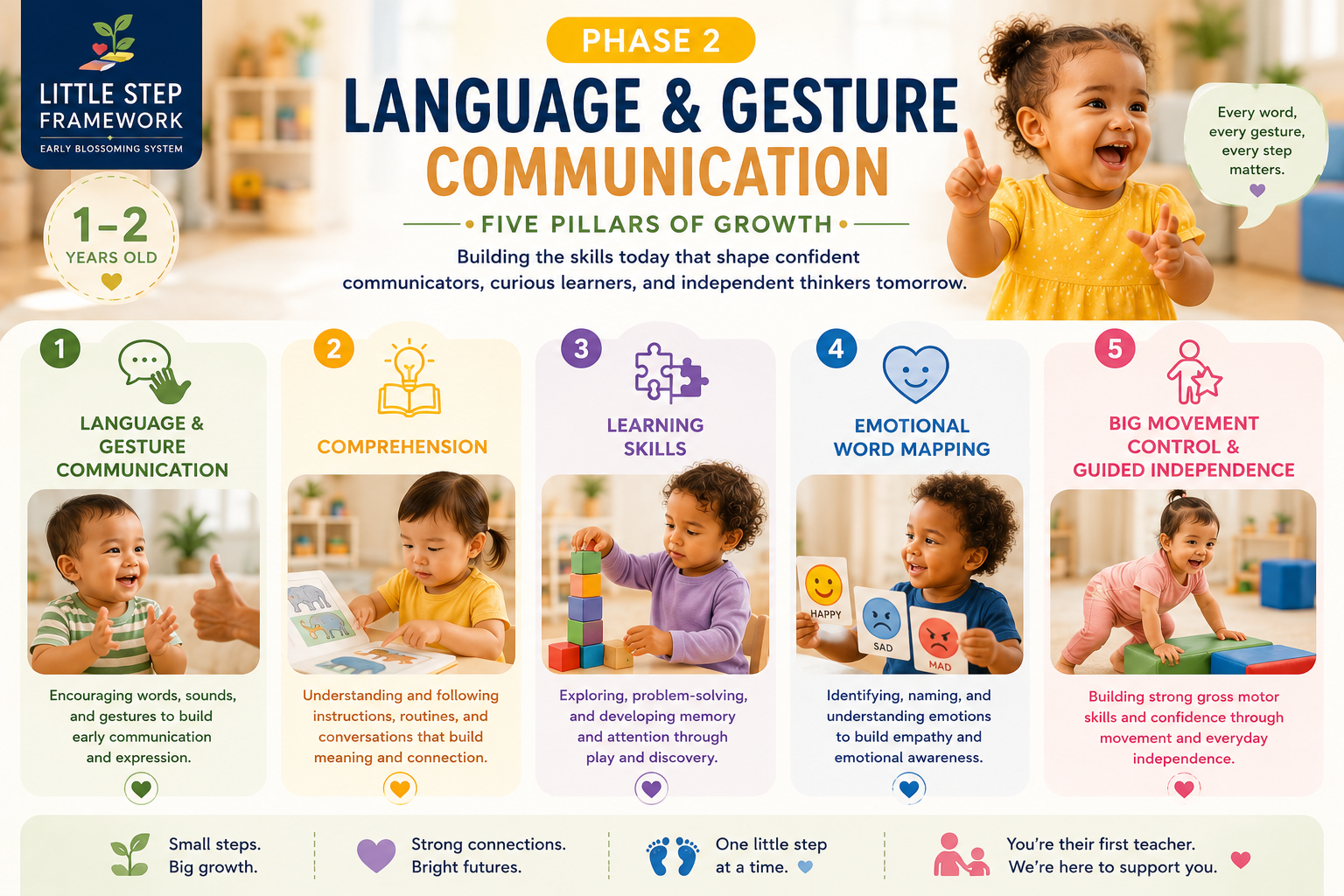
The Five Pillars of Phase 2
Pillar 1: Language & Gesture Communication
Communication begins long before children speak in complete sentences. Words, gestures, facial expressions, pointing, and simple signs all help children express their wants, needs, and ideas.
By responding to these early forms of communication, parents encourage confidence while laying the foundation for spoken language.
Pillar 2: Comprehension
Understanding comes before speaking.
As children hear familiar words and simple directions every day, they begin connecting language to people, objects, routines, and actions. These early comprehension skills become the building blocks for future learning.
Pillar 3: Learning Skills
Toddlers are natural explorers.
Through play, repetition, and hands-on experiences, children begin developing attention, curiosity, problem-solving, and the confidence to try new things. Every activity becomes an opportunity to learn.
Pillar 4: Emotional Word Mapping
Young children experience big emotions before they have the words to describe them.
Helping children hear and understand words like happy, sad, frustrated, and excited gives them the vocabulary to express their feelings while strengthening emotional awareness and healthy communication.
Pillar 5: Big Movement Control & Guided Independence
As confidence grows, so does independence.
Walking, climbing, carrying objects, helping with simple tasks, and practicing everyday routines all contribute to physical development while encouraging responsibility and self-confidence.
Supporting independence one small step at a time helps children develop the confidence to explore their world safely.
Growing Through Everyday Experiences
Development during the toddler years happens in ordinary moments.
Talking during meals, reading together, using simple signs, naming emotions, encouraging movement, and celebrating small accomplishments all become opportunities to strengthen your child’s development.
The goal isn’t perfection.
The goal is creating meaningful interactions that help your child grow with confidence.
Continue Your Journey
Each of the five Pillars includes its own in-depth article filled with practical activities, parent guidance, and everyday strategies you can begin using immediately.
Not sure where to begin?
Take the FREE Phase 2 Development Snapshot to discover your child’s strengths, identify your next Little Step, and receive personalized guidance based on your responses.
Together, we’ll continue building communication, confidence, and independence—one little step at a time.